
I don’t know about you but I felt very silly calling my first homeschool parent-teacher meeting. I mean, I knew I needed to catch my husband up on a few things but it felt way too formal for the chill approach we have to both parenting and homeschooling. He even raised an eyebrow when I proposed it, but I’m so glad we pushed through how awkward it all felt. Regular check-ins and assessments have truly rounded out our homeschool routine and gotten all four of us on the same page.
Related Post: How & Why We Do Parent-Teacher Meetings in Our Homeschool
Our approach now
In the beginning, meetings and record keeping sort of swayed from overly formal school paperwork re-creation to so casual that it felt like nothing meaningful got captured.
I used to rely on my memory for progress, challenges, and wins, until months later when I couldn’t quite remember when something shifted or why. At the same time, I didn’t want documentation to become another burden in an already full homeschool day.
Regular times to touch base were not something our family took part in I suppose because it felt like we already saw all we needed to. Over the last 18 months or so both my husband and I have just been busier outside the home and little pivots were slipping through the cracks.
Most of it was no big deal but we both felt like we were missing out on major milestones at one point or another. Additionally, the kids would want to show us their work or new skill they learned and it would sometimes feel like steps were skipped somehow. For example, we may have introduced a new reading or spelling concept. This small new trick the child may have learned might be cool and all but the other parent might not necessarily know how to reinforce it properly, which could easily derail the child’s confidence or willingness to continue.
Stuffy as they may feel, these meetings worked to dissolve some of that. We both know where we are in lessons, what so-and-so is struggling with or excelling at, and we know best how to support each other. Meetings don’t happen weekly or even monthly but at least every other Session. We prep some snacks or our favorite beverages and sit down with our notes and Notion to get current together.
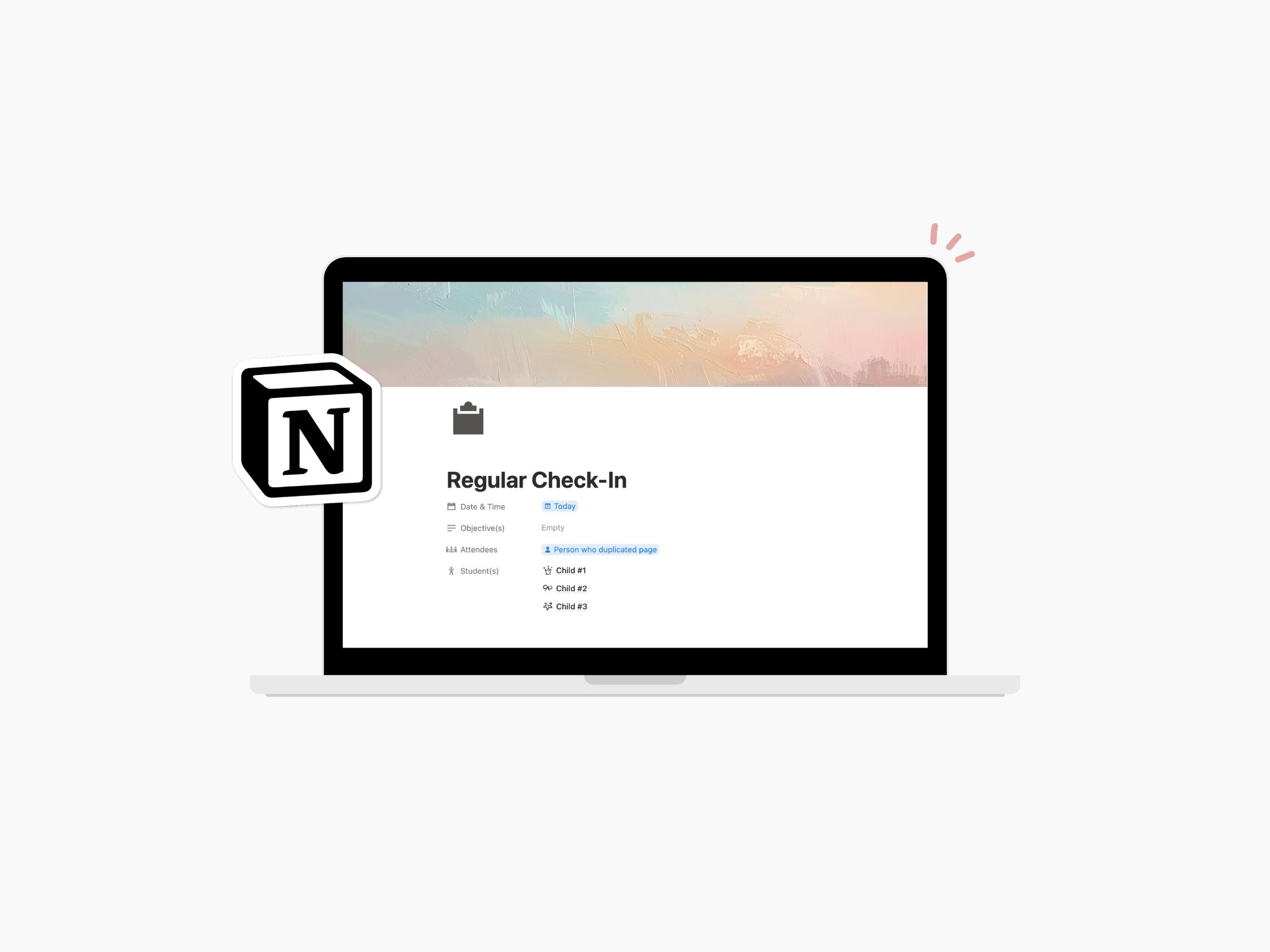
Simple Setup Overview: Parent-Teacher Meetings
At it’s core, this simple system needs to serve as a log for short reflections as a way to connect notes to students, and parents to a bird’s eye view of all of it. It’s another way to connect the dots, track progress, and simplify your process at year’s end. In Notion, if you treat each check-in as a lightweight entry (even a few sentences at a time) you’ll slowly build context over time—without needing heavy structuring. Consistency matters more then detail here.
Here’s what to include in your Parent-Teacher Meetings Database build:
- Name of the Meeting: We call ours Cocoa Chats because there’s usually some flavored hot chocolate whipped up for these meetings (usually planned for after the kids have gone to bed for the night) but we also have called them Curriculum Chats in the past too. Naming conventions aside, you’ll need to put something here even if it’s a different emoji for each meeting. Call it what it is: New Year Meeting, Emergency Discussion, Mid-Year Check-up, Final Check-In, etc.
- Date & Time
- Objective(s): What the purpose of this particular meeting is. This could be a text property that you fill in. If you have regularly scheduled meetings that are pretty repetitive you could instead use the Select property and choose options like Regular Check In, Pivot Meeting, or Annual Assessment. Try and keep it straightforward here, you can get messy in the content of the page.
- Attendees: If all of you homeschooling adults actively use Notion, put this in as a Person property so that you can tag them directly. Otherwise I’d just use a Text property and type in names.
- Student: If you have built your Student Profiles, go ahead and link that database as a Relation property. We only link the student discussed in that particular meeting, although usually it’s both now becuase they are still so young and usually working closeby on another.
I went ahead and built two templates in this database to save us a little bit of time as well. This way each new meeting page will auto-populate parts for us the same way each time.
- Regular Check-In: Is the simpler of the two and just has a space for basic notes and updates we want to mention or track. I made this the default for every new meeting page.
- Assessment Meeting: Asks us what we want to start, stop, and continue doing in our homeschool.
Both templates start off with an intention set at the very top. They both also end with an action items list for us to be sure and address at the very next meeting. If the action items will be taken on by one of us primarily we’ll notate that here.
Before we go on, if this is already feeling too deep for you, I’ve shared this template here for you to Duplicate into your own Notion.
What this Database does (and doesn’t do)
This system exists to capture learning patterns (in both the kids as well as myself as their teacher). It hold reflections, ideas, and observations to support thoughtful adjustments as we push forward in our homeschool journey. It’s all about maintaining clarity.
This database and setup does not require long documentation sessions or create any pressure to turn the home experience into a school-at-home.
Who this setup is for
This approach works especially well if:
- You prefer reflection over reporting
- You want insight without paperwork
- You homeschool younger kids or in flexible rhythms
It’s ideal for families who want documentation to feel grounding, not draining.
If you homeschool mostly-solo and the other adult could use some updates, Parent-Teacher Meetings might be for you. Most traditional schools try to have the teacher meet with parents at least once a school year, if not once per semester, why not homeschoolers? We’ve likely got more substantial updates and anecdotes to share.
In the full Simple Homeschool Notion Hub, these reflections connect directly to student profiles, goals, and your calendar — so insights stay visible without extra work.
If building this yourself feels empowering, this post just gave you the framework. You’re all set if you followed along. If you’d rather start with everything already connected, that’s what the hub is for.
Prefer everything already connected? The Simple Homeschool Notion Hub brings all of these pages together in one calm system.


Leave a Reply